Product
A sentence in, a pull request out.
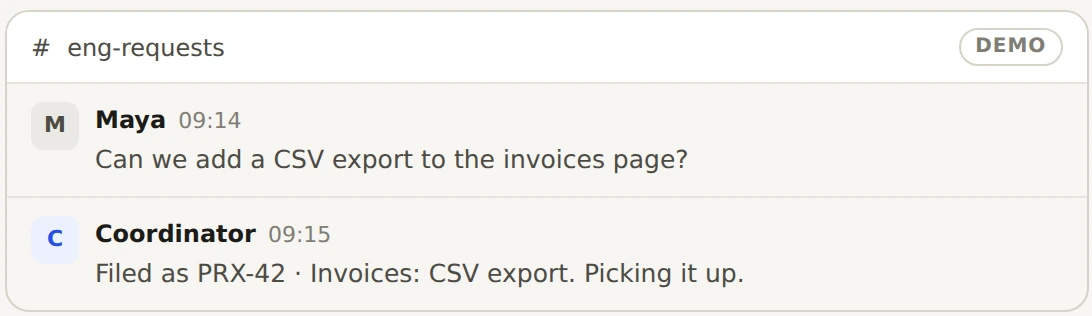
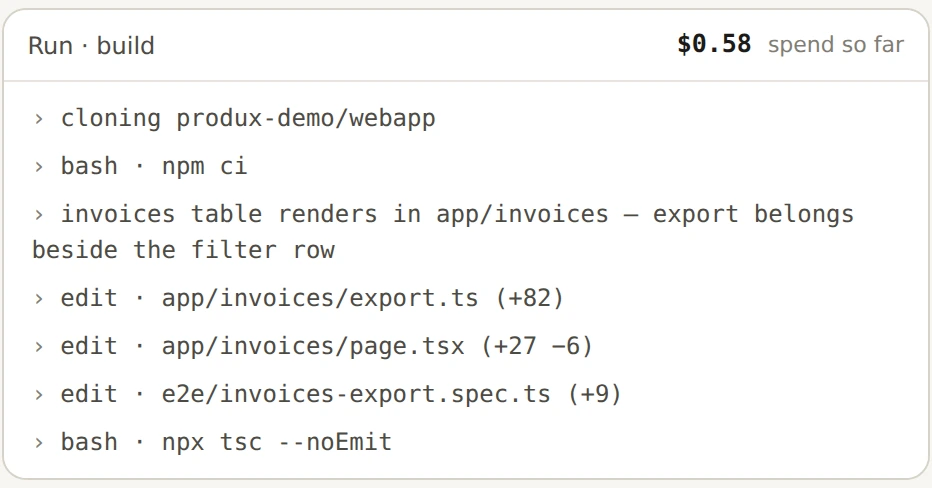
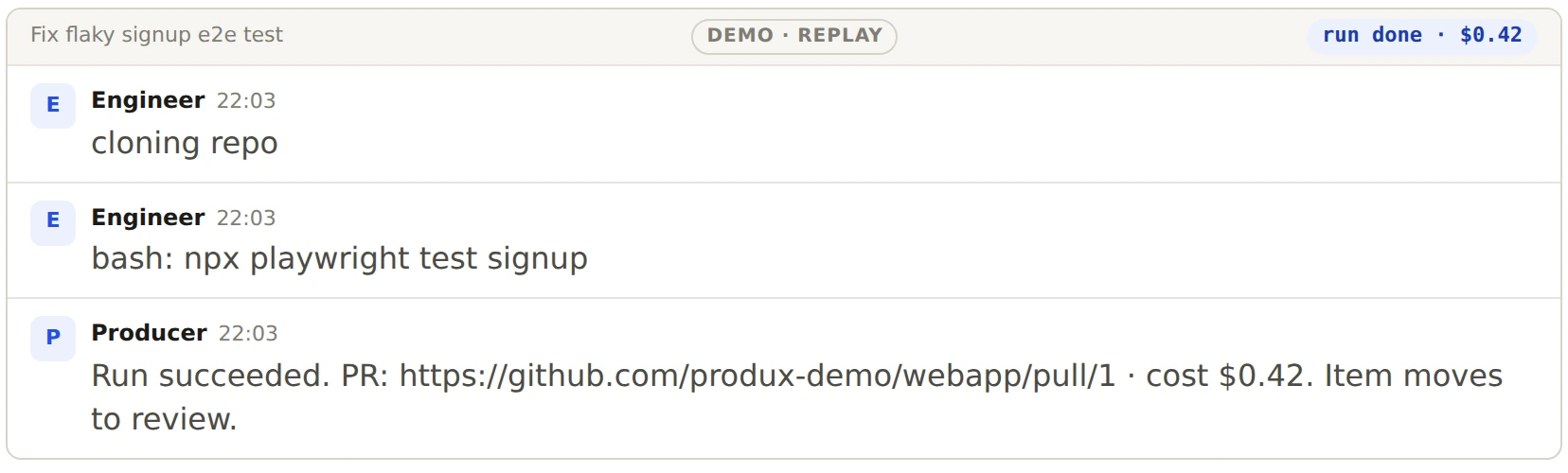
Here's the whole trip — real screenshots from the demo org, nothing staged.
How people come in
The engine
Named tasks, not a black box.
Triage
Reads the ask, files the ticket, routes it.
fast modelBuild
Writes the change in a sandbox, opens the PR.
frontier modelVerify
Runs your spec in a real browser, keeps the evidence.
no tokensNarrate
Tells the thread what happened, in plain words.
fast modelDesignsoon
Brief, render, adversarial critique — then built in code.
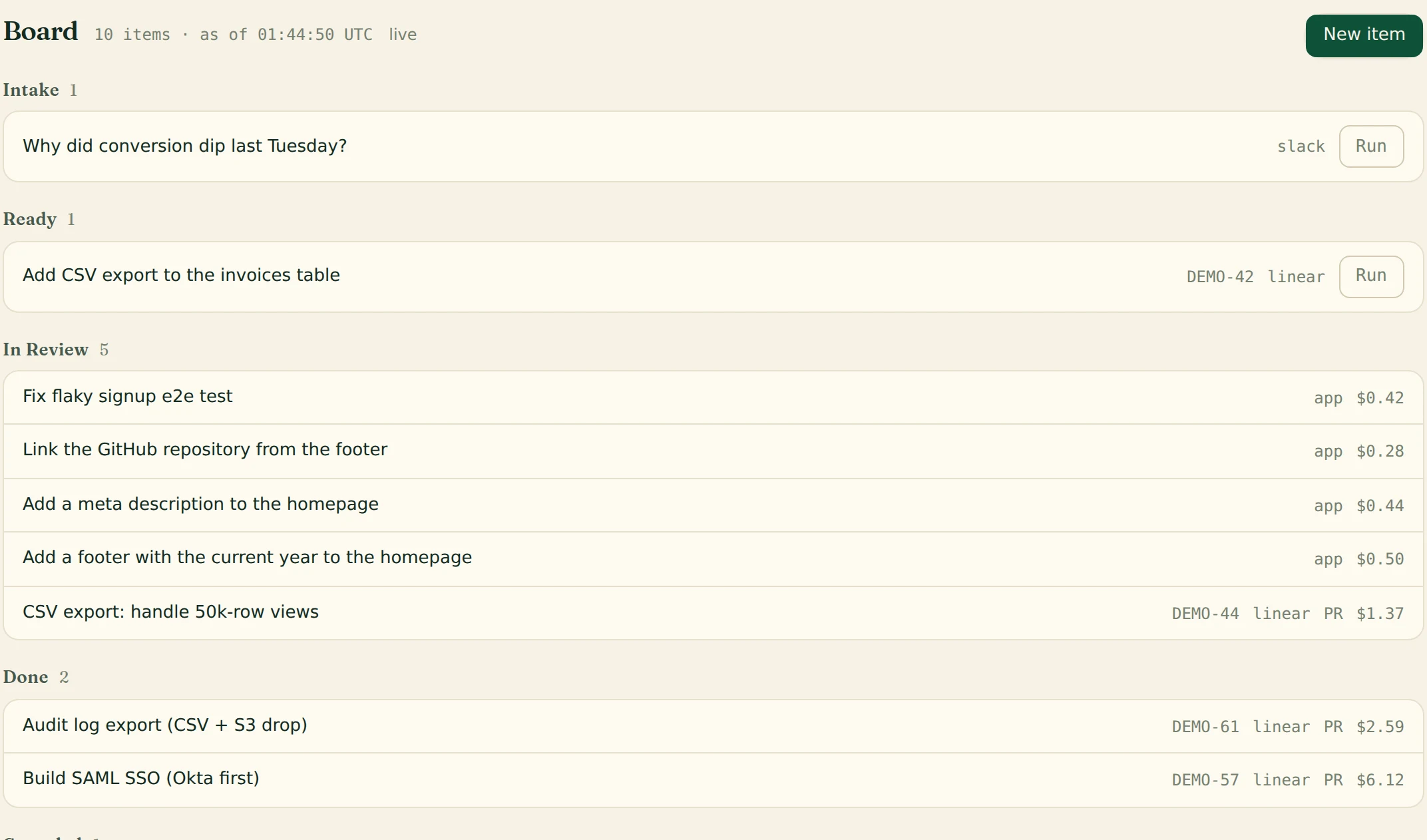
frontier + imageEvery model call lands on the ticket's cost line — you see the bill per ticket, not per month. New capabilities arrive like plugins; soon experts will publish their own.
Who decides
You do.
It opens pull requests; it doesn't merge them. Each repo earns more autonomy only when you grant it. How control works
Hosted
Connect and go.
Your own servers
One runner binary inside your network. Code and credentials never leave.